Successful Planting
19 July 2026
Before Planting
When selecting a tree, consider its purpose: shelter, shade, screening, timber, environmental benefits, or beautification?
Choose your site well, is it suitable for your selected tree? Observing successful species of trees in your surrounding area will give you a good indication of what has grown well in your local environment.
Planting
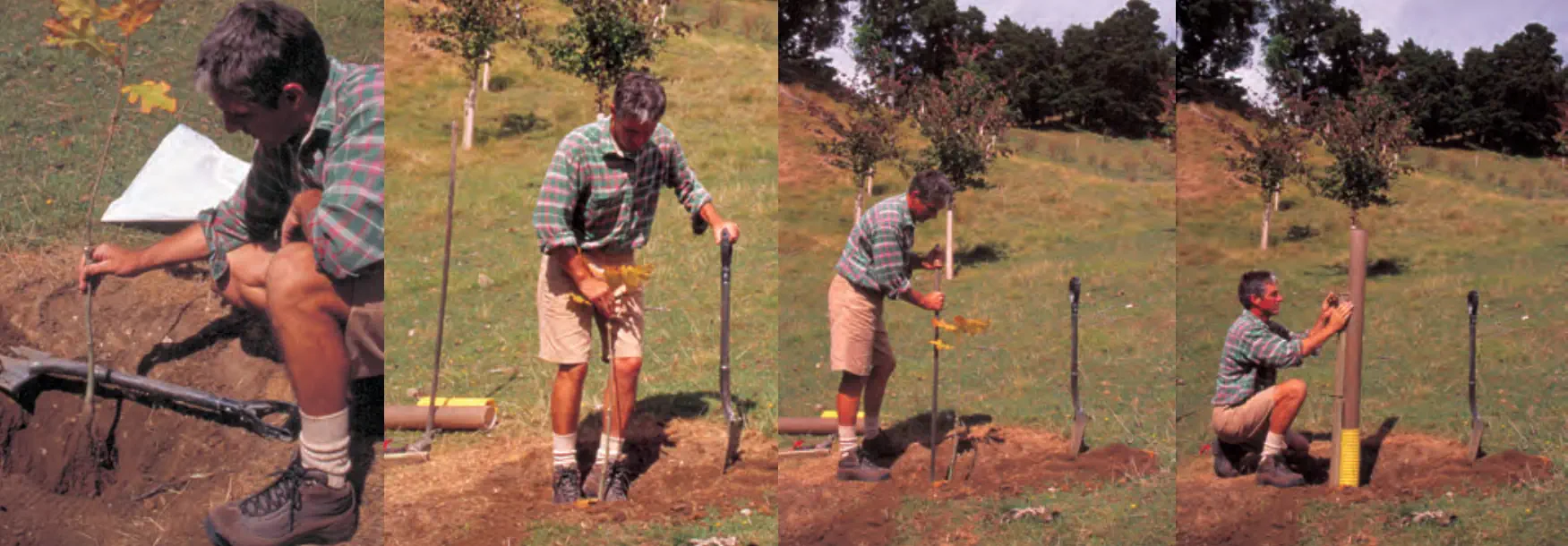
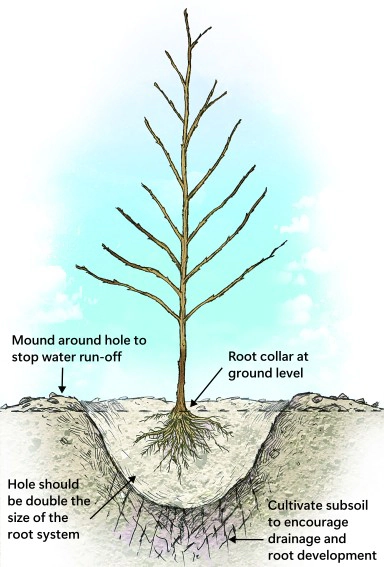
Cultivate an area 40cm x 40cm and to a depth of 30cm, opening up a planting hole large enough to accept the root system. Place the tree in the centre of the hole, spreading the roots. Replace the earth around the roots, discarding any turf. Forestry seedlings need adequate cultivation to a full planting spade depth.
Pull the plant through the fill approximately 10cm to ensure the roots are straight. Continue to hold the top of the tree and firm the soil around the stem with the soles of your boots, firming to eliminate air pockets around the roots. (See diagram below for forestry planting method.)
The collar of the tree (the junction between the stem and roots) should be at ground level. However, in drought prone areas the tree can be set 10cm deeper in a shallow hollow to gather rainfall water. This helps if the soil is dry, or trees are exposed to desiccating wind or periods of heavy frosts. Evergreen trees ideally require regular watering after planting where practical.
Do not add fertiliser directly into the planting hole as this might burn the roots of the tree.
Cover the area around the tree with mulch. Do not pile mulch against the trunk. Bark, stones, course sawdust, post peelings, silage tops or cut vegetation all make excellent moisture retaining mulch.
Where staking is required, place the stakes so they don’t potentially damage the trunk and branches or the roots. Use a rubber inner tube tie, which will not cut and damage the trunk. It will eventually perish or can be removed when no longer needed.
 Aftercare
Good weed control is essential for successful establishment and quick initial growth as trees planted and then left in a thick sward of grass and weeds will struggle to remain alive, often dying due to moisture competition in a dry summer.
Following planting in the winter, apply a 1m-diameter ring of suitable mulch. This will conserve the winter soil moisture and form a physical barrier to stop the seedling weeds germinating. Spread the mulch 10cm deep, leaving a 5cm-diameter area clear of the trunk.
A further 30cm spray ring will keep invasive weeds from growing back into the mulch ring. If mulch is not available, then keep the planting site free of all weeds using a contact herbicide such as Buster or Galant. Roundup is easily translocated into the plant, so the use of plastic spray guards will protect the tree stem. Residual herbicides rely on a chemical barrier to stop weeds germinating, however many trees are sensitive to these products. Always seek local advice before using herbicide spray products.
Staking: Useful in exposed windy sites to allow newly planted trees to establish strong anchoring roots. A short stake is best, allowing movement of the trunk, encouraging root establishment and stem growth. Tyre inner tubes make excellent tree ties avoiding stem damage.
Fertiliser: The application of fertiliser at the time of planting is not considered essential on farm sites and the fertile soils of some regions of New Zealand. However, on the more infertile soils additional nutrition combined with good weed control results in huge benefits.